Vibrant tropicals known for their exotic bracts and lush foliage.
Heliconias are a signature of tropical landscaping. Their brilliant bracts come in red, yellow, orange, and variegated forms, and they thrive in South Florida’s warm, humid climate. These are evergreen in zones 10B–11, perfect for mass plantings, borders, or statement backdrops. These tropical perennials thrive in heat, humidity, and rich soil, making them a signature choice for vibrant, tropical designs.
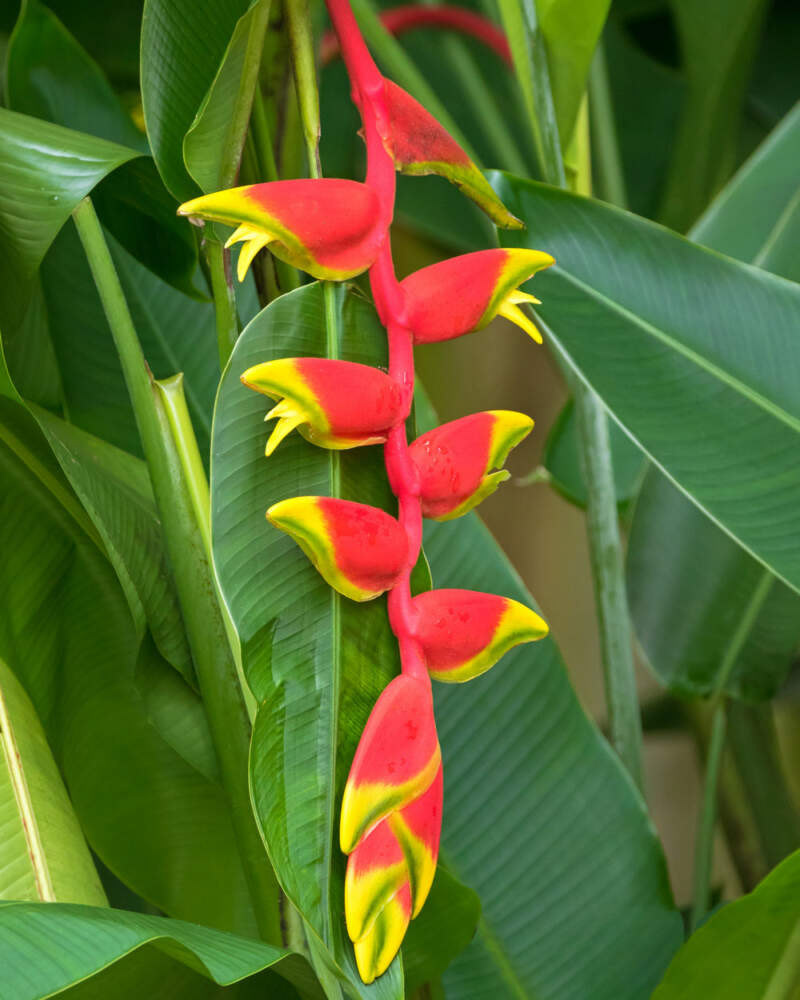
Heliconia rostrata (Lobster Claw)
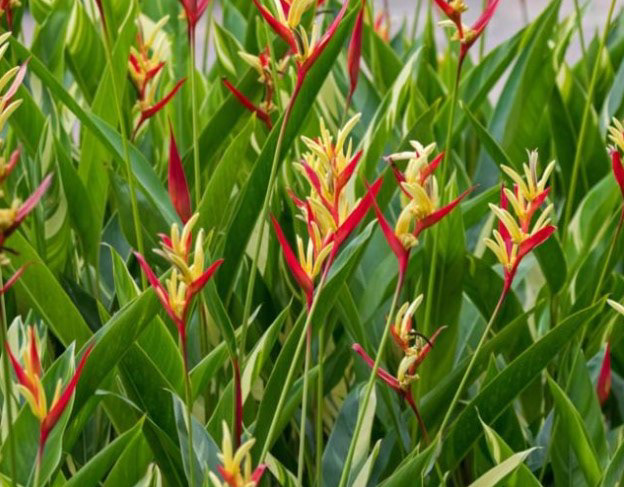
Heliconia psittacorum 'Lady Di'
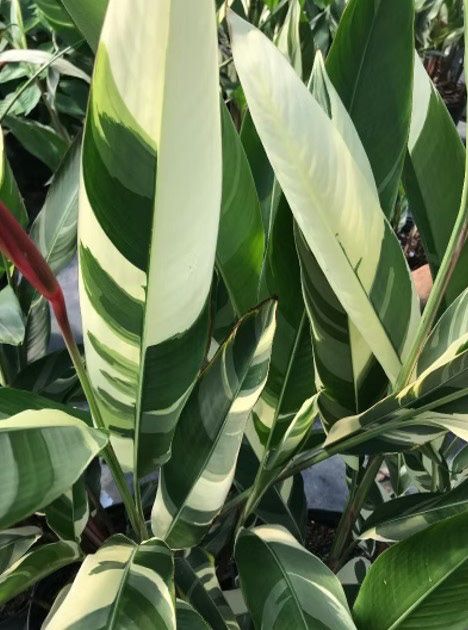
Varigated
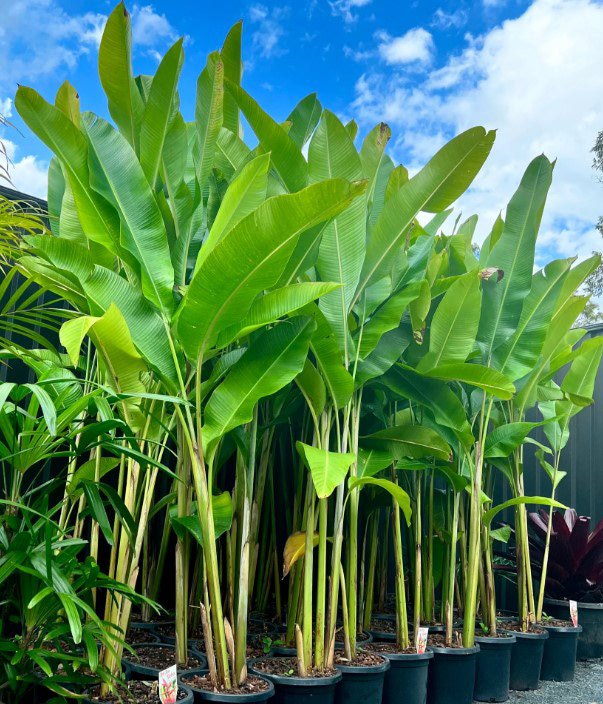
Heliconia (False Bird of Paradise)
Prefers full to partial sun.
Requires consistently moist, fertile soil with regular watering.
Mature size: 5–8 ft H × 3–4 ft W.
Classic tropical plant with large green leaves and colorful bracts, ideal for borders and tropical backdrops.
Heliconia rostrata (Lobster Claw)
Full to partial sun.
Requires frequent watering and rich, organic soil.
Mature size: 5–6 ft H × 3–4 ft W.
Pendulous red-and-yellow bracts that cascade downward; excellent as a tropical centerpiece.
Heliconia bihai ‘Sunrise’ (Yellow Variegated)
Partial to full sun with good humidity.
Keep soil evenly moist with good drainage.
Mature size: 6–8 ft H × 4 ft W.
Features yellow-streaked bracts and upright growth; great for poolside or accent plantings.
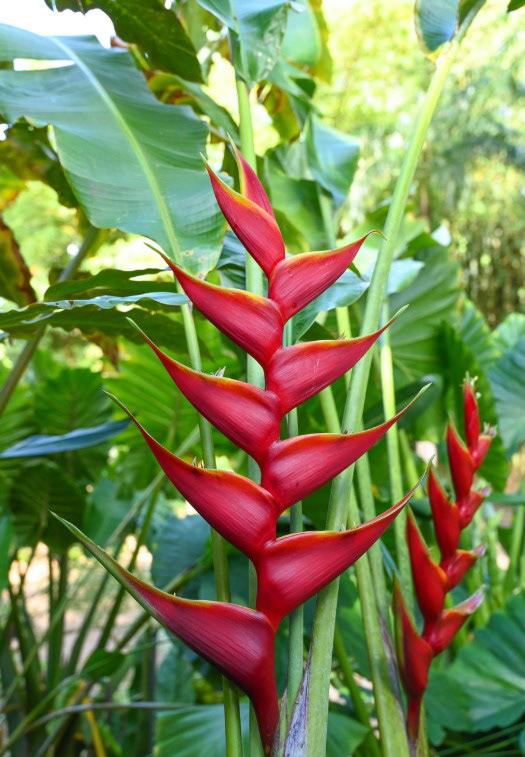
Heliconia caribaea
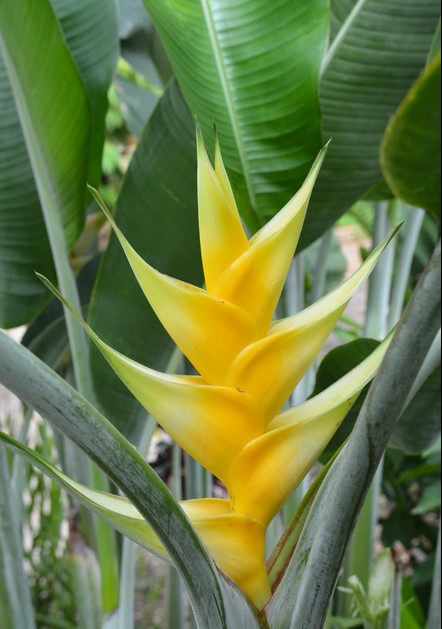
Heliconia bihai ‘Sunrise’ (Yellow Variegated)
Heliconia caribaea
Full sun to light shade.
Moist, compost-rich soil; water regularly.
Mature size: 8–12 ft H × 4–6 ft W.
Large, upright species with vivid red-orange bracts; dramatic for screens or backdrops.
Heliconia caribaea × bihai ‘Criswick’
Full to filtered sunlight.
Requires consistent moisture and organic mulch.
Mature size: 6–9 ft H × 3–4 ft W.
Hybrid variety with strong upright stems and bright crimson bracts; great as a focal plant.
Heliconia latispatha ‘Red’
Full sun to partial shade.
Regular watering; mulch to maintain moisture.
Mature size: 5–6 ft H × 3 ft W.
Reliable performer with red bracts and yellow tips; good for hedges or mass plantings.
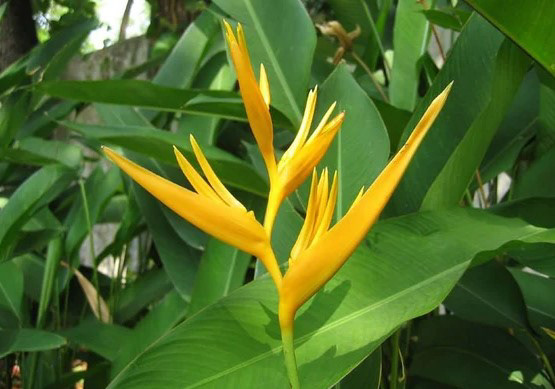
Heliconia psittacorum ‘Golden Torch’ (Parrot’s Beak)
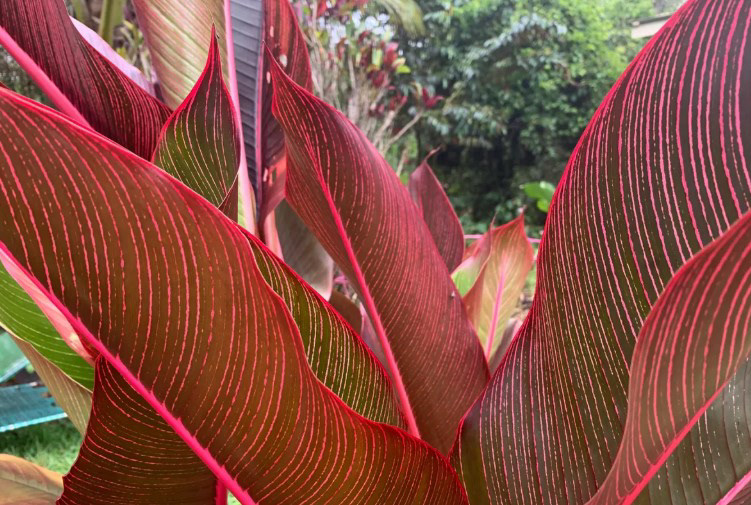
Heliconia indica ‘Spectabilis’
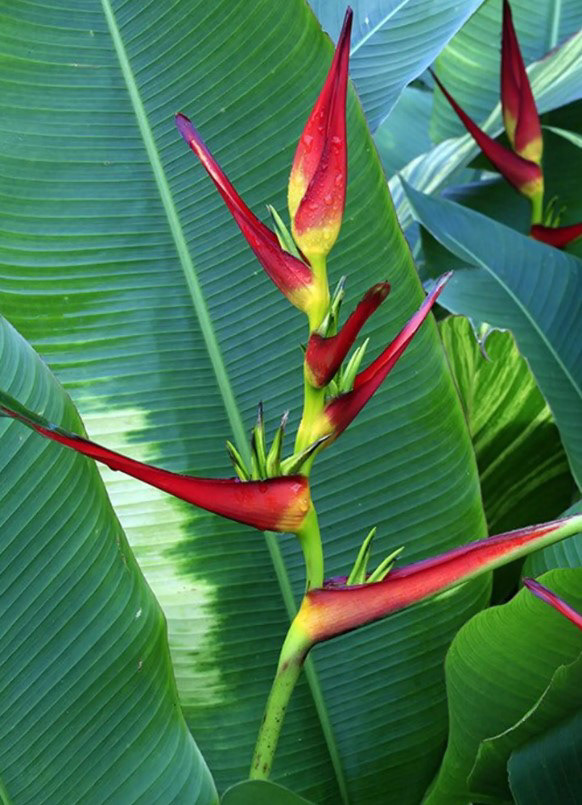
Heliconia latispatha ‘Red’
Heliconia psittacorum ‘Golden Torch’ (Parrot’s Beak)
Full sun to light shade.
Keep soil consistently moist but well-drained.
Mature size: 3–4 ft H × 2–3 ft W.
Compact form with golden-yellow bracts; blooms nearly year-round; suitable for containers and small gardens
Heliconia indica ‘Spectabilis’
Full sun to partial shade.
Regular watering; prefers moist, well-drained soils.
Mature size: 6–8 ft H × 3–4 ft W.
Distinctive red-orange bracts and bronze-tinted foliage; strong vertical presence in mixed beds.
Heliconia psittacorum (Standard)
Full sun and high humidity.
Moderate to high water needs; mulch helps maintain moisture.
Mature size: 3–4 ft H × 2–3 ft W.
Slender orange-red bracts; dependable flowering and attracts pollinators.
Heliconia psittacorum ‘Variegated’
Full sun to partial shade.
Keep soil moist but well-drained.
Mature size: 3–4 ft H × 2–3 ft W.
Variegated foliage with yellow-green striping and bright orange bracts; ideal for patios or borders.
Heliconia stricta
Partial sun to filtered light.
Even moisture preferred; avoid drying out the soil.
Mature size: 4–5 ft H × 3 ft W.
Dense, upright species with vivid red bracts; excellent for shaded gardens or containers.
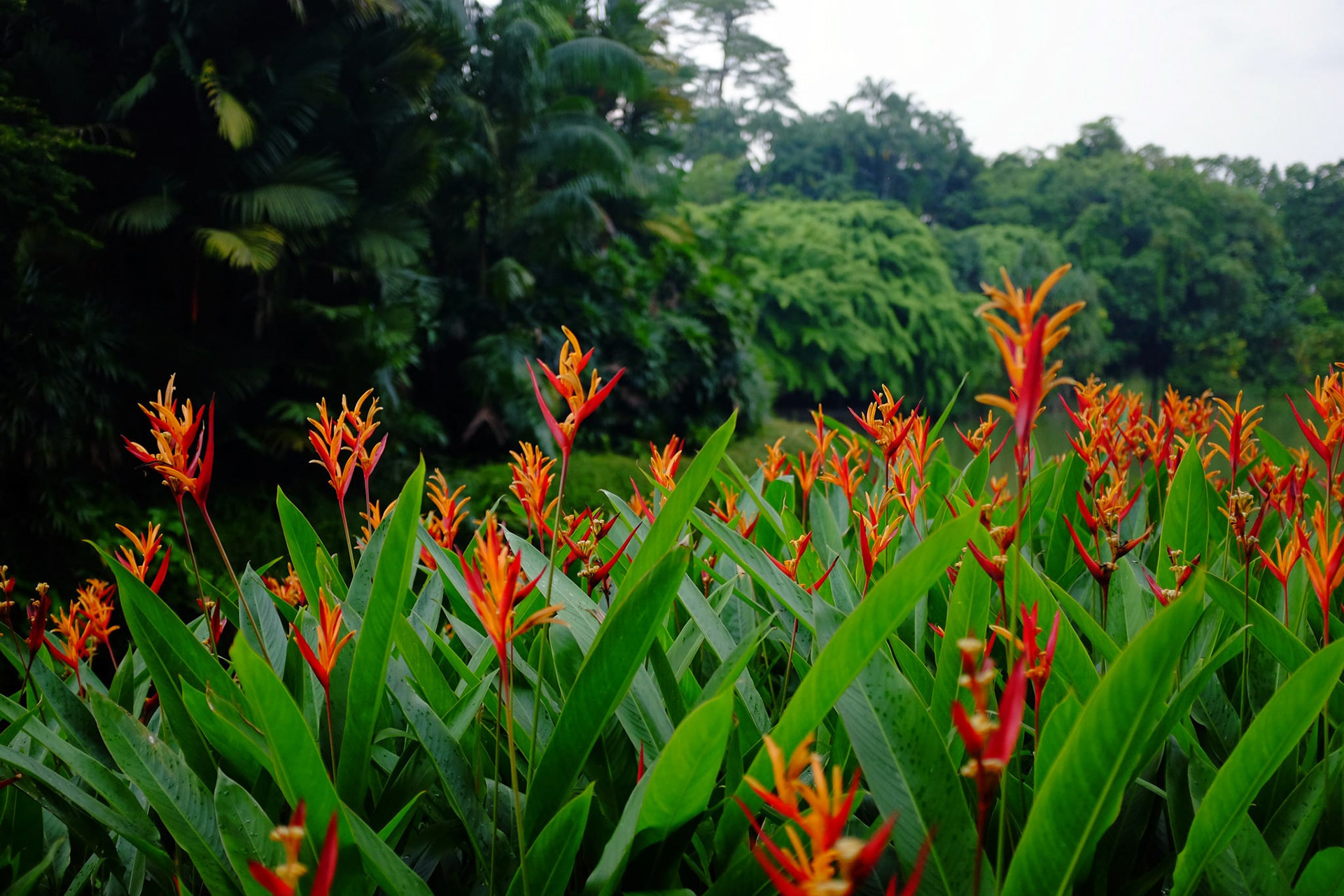
Heliconia psittacorum
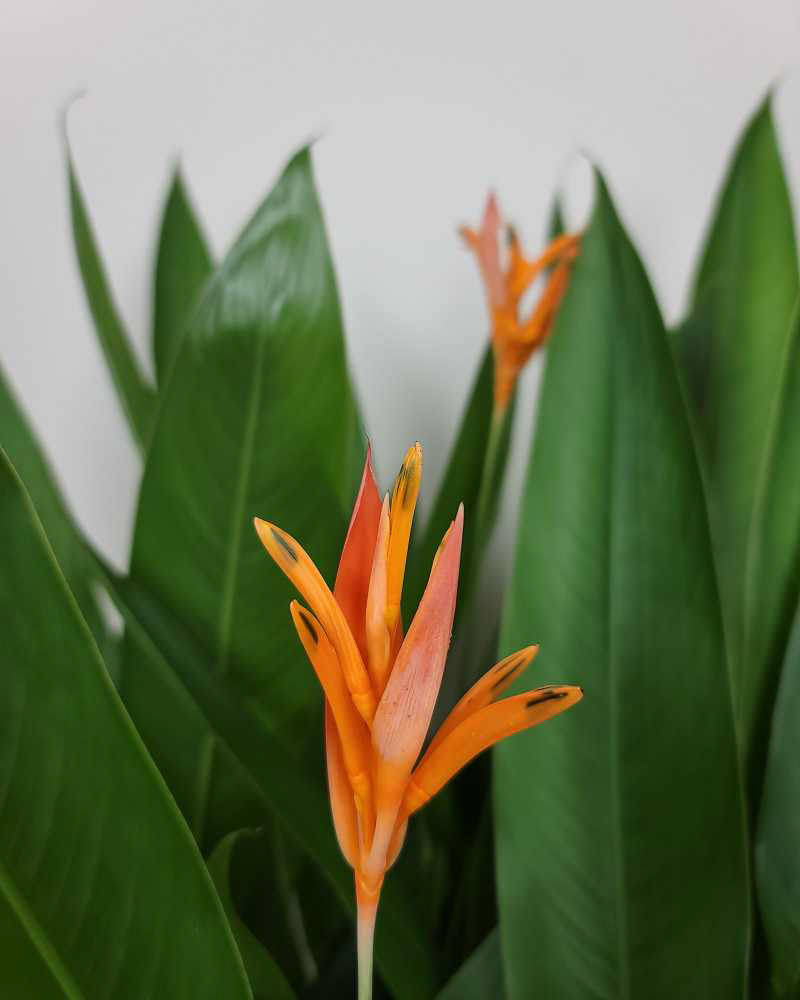
Heliconia psittacorum ‘Choconiana'
Light & Soil Requirements
Heliconias prefer partial sun to filtered light, though some species like Heliconia rostrata (lobster claw) can tolerate full sun. They require moist, fertile, well-draining soil rich in organic matter.
Before planting, amend sandy soils with compost to improve water and nutrient retention. These plants thrive in high humidity and regular watering but dislike drought or salt exposure, so avoid coastal sites.
Before planting, amend sandy soils with compost to improve water and nutrient retention. These plants thrive in high humidity and regular watering but dislike drought or salt exposure, so avoid coastal sites.
Water & Feeding
Keep soil consistently moist during the growing season. Heliconias respond well to monthly feeding with a balanced fertilizer (such as 10-10-10 or organic compost tea).
Mulching helps maintain soil moisture and prevents weeds. These tropicals are not drought-tolerant, and prolonged dryness can reduce flowering and leaf quality.
Flower & Foliage Appeal
Heliconia blooms appear spring through summer, featuring brilliant bracts that can be red, orange, yellow, or pink.
Each long stalk holds dozens of waxy bracts that hide the small true flowers inside. These colorful structures last for weeks and make excellent cut flowers.
Each long stalk holds dozens of waxy bracts that hide the small true flowers inside. These colorful structures last for weeks and make excellent cut flowers.
The large, paddle-shaped leaves lend a lush, coarse texture to garden designs, pairing beautifully with fine-leaved plants like ferns, gingers, or palms.
Pollinator Connection
Heliconias have a fascinating relationship with hummingbirds, their primary pollinators.
Each species has co-evolved with a specific hummingbird species that collects nectar and defends its feeding territory fiercely. In South Florida, local hummingbirds are naturally drawn to heliconias, bringing movement and color to the garden.
Each species has co-evolved with a specific hummingbird species that collects nectar and defends its feeding territory fiercely. In South Florida, local hummingbirds are naturally drawn to heliconias, bringing movement and color to the garden.
Landscape Use & Design Tips
-- Heliconias add height, texture, and tropical flair to any design. Use them:
-- As background screens behind lower tropicals like bromeliads or calatheas.
-- In mass plantings for resort-style gardens.
-- Near water features or shaded walkways for lush, humid conditions.
-- Their sculptural bracts and upright forms contrast beautifully with soft understory groundcovers like Purple Queen, Foxtail Fern, or Liriope.
Popular Varieties in Florida
Heliconia rostrata (Lobster Claw)
The most iconic species, with drooping red-and-yellow bracts up to 2 feet long. Grows 5–6 feet tall and thrives in full sun to partial shade.
The most iconic species, with drooping red-and-yellow bracts up to 2 feet long. Grows 5–6 feet tall and thrives in full sun to partial shade.
Heliconia psittacorum (Parrot’s Beak)
Compact, ideal for borders or massing, 3–4 feet tall with vivid orange, red, and yellow bracts. Excellent for smaller landscapes or containers.
Compact, ideal for borders or massing, 3–4 feet tall with vivid orange, red, and yellow bracts. Excellent for smaller landscapes or containers.
Heliconia champneiana (Golden Torch)
Upright flower spikes with bold red-to-gold bracts; grows 6–8 feet tall. Best in filtered light and fertile soil.
Upright flower spikes with bold red-to-gold bracts; grows 6–8 feet tall. Best in filtered light and fertile soil.
Heliconia caribaea (Caribbean Heliconia)
Large and dramatic, reaching 10–15 feet tall. Best for open landscapes or as a specimen planting.
Large and dramatic, reaching 10–15 feet tall. Best for open landscapes or as a specimen planting.